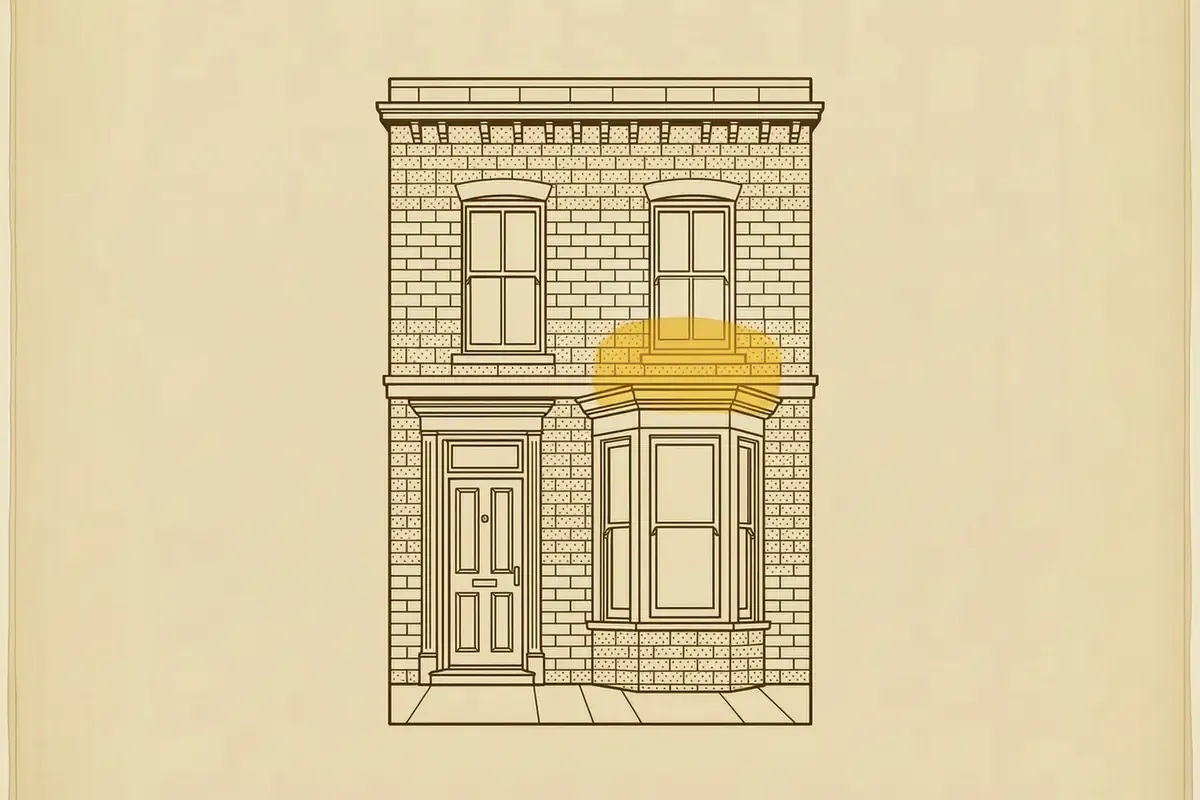
Walk down Tilehouse Street or across the Market Place and the windows date the town for you: timber-framed ranges with jettied upper floors, Georgian townhouses in red and yellow brick, Victorian terraces where the sashes still carry their margin lights. Almost all of it lies inside the Hitchin Conservation Area, which was designated on 14 March 1969. Homeowners often read that as the council controlling every change to a window. The council’s own pages are narrower than that.
If you are repairing, repainting or draught proofing an existing sash, you need no permission, and a replacement that matches the original in design and material normally needs none either. An application only starts when the window’s appearance changes — a new frame material, a different glazing pattern, a different opening — and inside an Article 4 area that line is drawn earlier than elsewhere.
What the conservation area changes
North Hertfordshire has 44 conservation areas, and Hitchin’s is among the oldest and largest. Designation does not stop you maintaining your windows. The Planning Portal’s doors and windows guidance states the national position plainly: repairs, maintenance and minor improvements such as repainting frames need no application, nor does fitting windows of a similar appearance to those already there, nor internal secondary glazing.
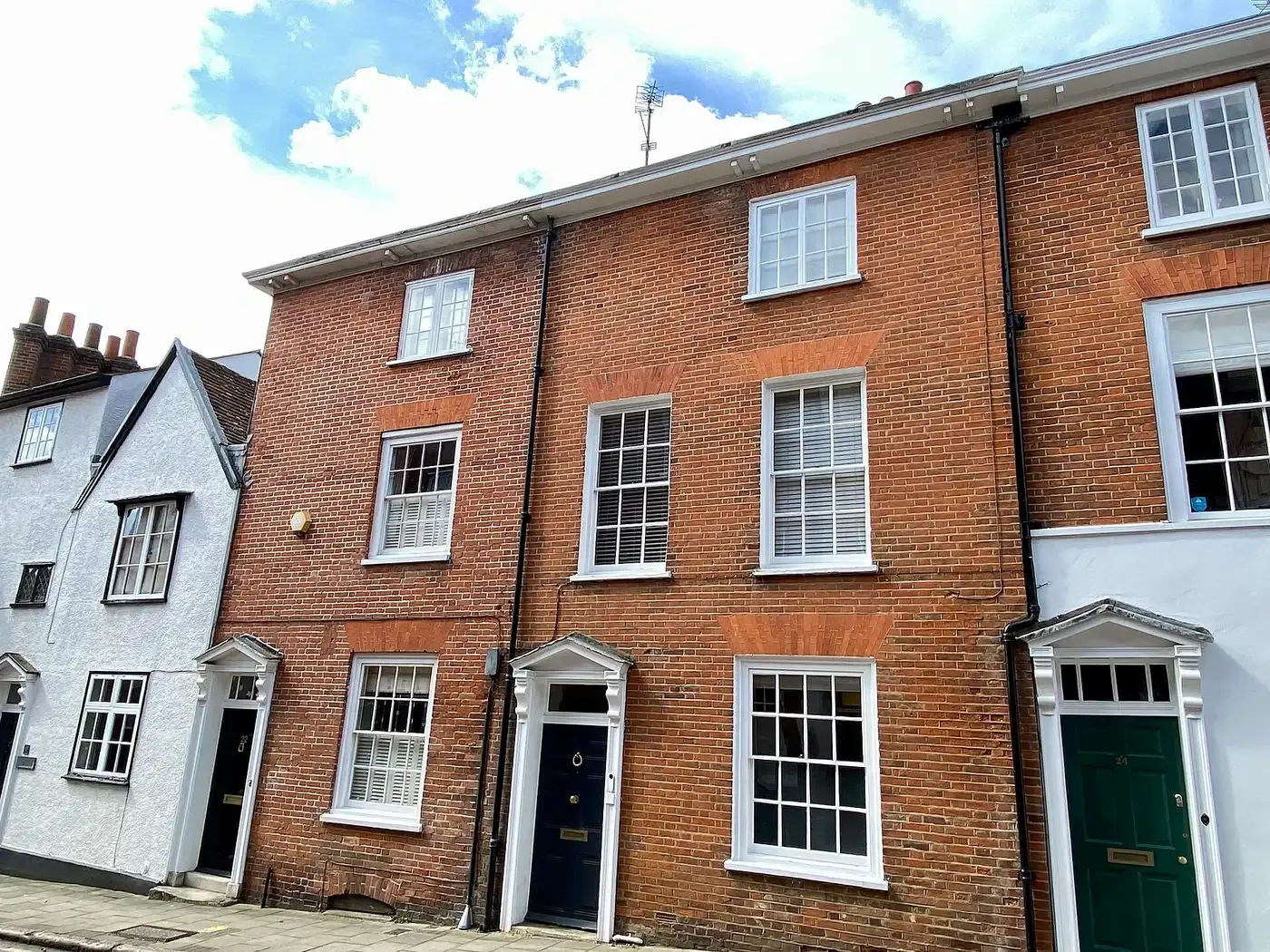
Photo: 22-24 Tilehouse Street, Hitchin, May 2025 by No Swan So Fine, CC BY-SA 4.0 via Wikimedia Commons; resized.
What designation adds is a harder look at anything that alters the street. A change of material, a thicker glazing bar, a sash swapped for a casement, or a new bay are the moves that take a window out of “repair” and into “alteration”. In a conservation area the council weighs those against the character the designation is there to protect, and the answer is far more often “repair the original” than “replace it”.
The Article 4 direction, and what it actually controls
This is where most of what you read online is wrong. Search for “article 4 direction Hitchin” and the top results point at a 2022 direction covering the town-centre shopping frontages — but that direction withdraws a single right, the change of use of a commercial building to a dwellinghouse, and has nothing to do with windows.
The direction that matters to a householder is the older one. North Herts has made two Article 4 directions, both dated 9 October 2012, covering the Hitchin Conservation Area and the Stockens Green Conservation Area. The council’s conservation areas and Article 4 directions page lists the seven matters they withdraw: enlargement, improvement or other alteration of a dwellinghouse; alterations to a roof; erection of a porch fronting a highway; hard surfacing; installation, alteration or replacement of a chimney, flue or soil and vent pipe; gates, walls and fences fronting a highway; and painting the exterior of a building fronting a highway.
Two of those touch windows: the first and the last. “Enlargement, improvement or other alteration of a dwellinghouse” is the class that would otherwise let you change a window without an application, and “painting the exterior” is the class that would let you repaint it. Withdrawn, they mean a change to the window’s appearance needs an application, while a repair that leaves the appearance untouched does not. The direction covers the conservation area as a whole, not a single street, so the answer depends on your address and on exactly what you propose.
What the appraisal records about these windows
The council’s Hitchin Conservation Area Character Statement (PDF, 2.8 MB), adopted on 26 July 2011, walks the town street by street and records what survives. Bancroft and the High Street carry listed buildings with Georgian and Victorian brick facades; Tilehouse Street holds the highest concentration of listed buildings in the town, timber-framed and Georgian houses among them; Bridge Street is timber-framed; Sun Street keeps its Georgian frontages.
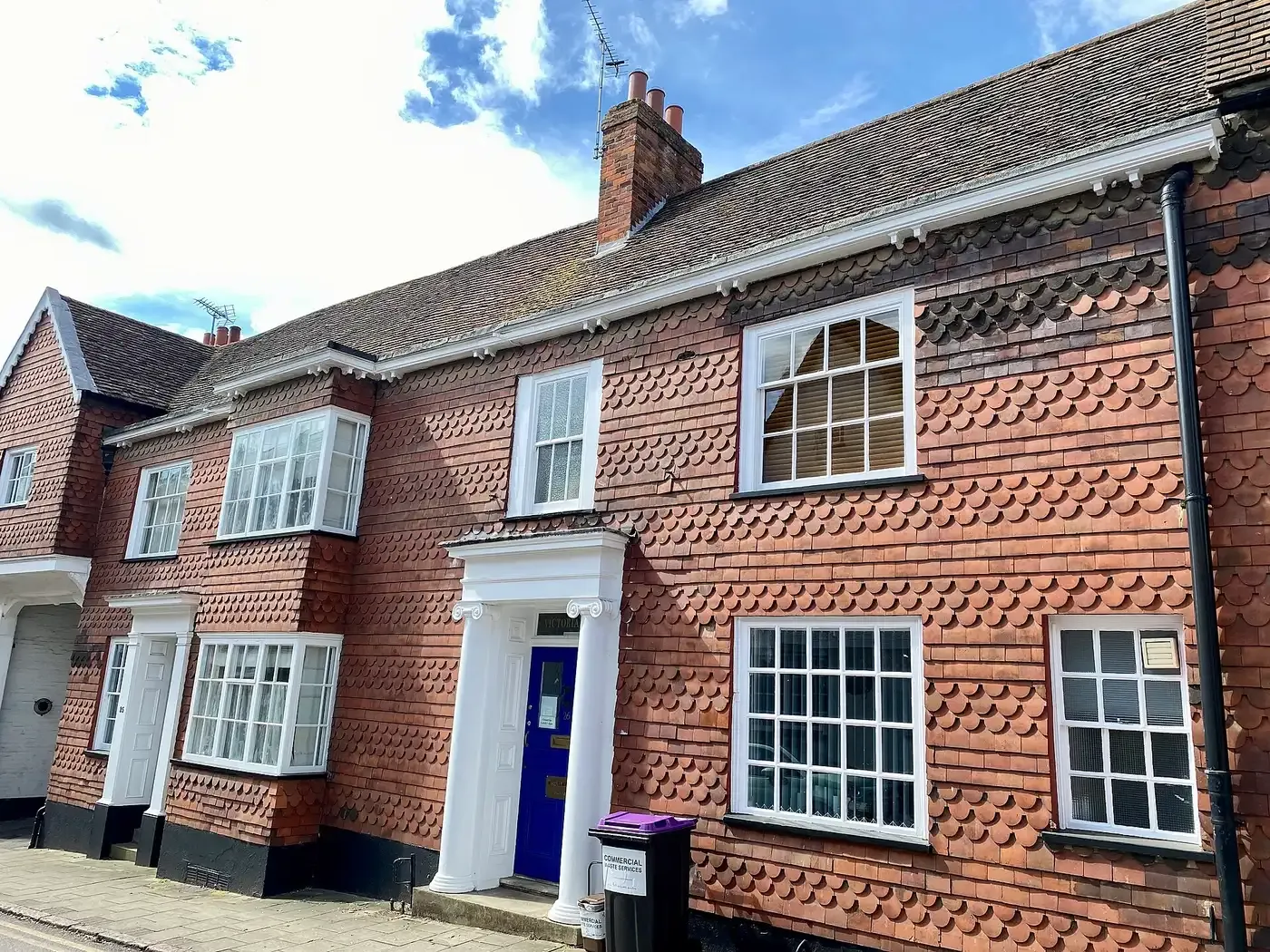
Photo: 26 Tilehouse Street, Hitchin, May 2025 by No Swan So Fine, CC BY-SA 4.0 via Wikimedia Commons; resized.
On the joinery it is specific. In the mid-Victorian terraces around Walsworth Road it records that “sash windows are the most common window type”, and that some of the original margin-light and multi-paned windows remain in Trevor Road and Benslow Lane. In the late-Victorian and Edwardian suburb of The Avenue, Highbury Road and Chiltern Road it notes the survival of most of the original front doors and sashed windows, alongside oriel windows and timber porches. It also lists, as a negative feature, the uPVC windows on some Walsworth Road properties — a plain statement of what the designation is trying to hold back.
The survey: reading the window before touching it
We begin with the frame rather than the glass. A survey of a Hitchin sash measures the gaps at the stiles, meeting rails and bottom rail, checks the parting and staff beads for wear, reads the cords and the size of the weights, and probes the bottom rails and sill for rot. We lift each sash to feel whether it is balanced, and we never force one that will not move.
Two cautions shape the visit. A sash that has been painted or nailed shut for years may have taken on a structural role, and forcing it is what breaks the frame. A gap that has opened above a cill can be settlement rather than a window fault. Decayed timber is cut back and pieced in, not written off — our guide to replacing or restoring rotten sash windows sets out how.
The overhaul, step by step
- Survey and record: gaps, bead wear, cord condition, weight sizes, rot, and whether the house is listed or inside the Article 4 area.
- Free the sashes: cut paint from the running surfaces and the pulleys, clear the weight pockets, free any fouled weight, and ease a warped sash rather than planing it thin.
- Repair the timber: pie in new sections where bottom rails, sills and stiles have rotted, matched to the original profile and species, so the frame stays whole.
- Re-cord: when one cord has gone we renew all four on that window, running them over pulleys that have been freed or replaced.
- Rebalance: weigh each sash against its weights and adjust the make-weights until it rests wherever it is left.
- Renew the beads: cut new parting and staff beads that carry the seals, and bring the running clearances back to true.
- Seal and glaze: fit the seals described below, then reglaze, keeping the old glass wherever it survives.
- Decorate: take the old paint off, prime, and recoat thinly so the mouldings stay crisp.
In a box frame we never trade the cords and weights for spring balances; the original mechanism outlasts every substitute, as our guide to spring balances versus cords and pulleys sets out.
Seals: wiper on the sliding faces, compression where they meet
A sash loses air in two different ways and wants two different seals. Where the parts slide past one another — the stiles against the parting and staff beads, and the meeting rails as they pass — the seal is a wiper, a brush pile chosen to bridge the gap it must close. The Energy Saving Trust is clear that foam strip is the wrong material on a sliding sash and brush strip the right one. Where two faces close together and stay — bottom rail onto sill, top rail onto head, and the meeting rail once shut — the seal is a compression profile bedded in a routed carrier.
SPAB’s sash window maintenance advice describes the approach we take: draught proofing built around new parting and staff beads that hold the seals, with worn beads repositioned or renewed and badly worn sashes re-edged. The Energy Saving Trust prices draught proofing windows, floors and doors together at around £55 a year in Great Britain — the whole house, not a single window. Our draught proofing service carries out the survey and the fitting.
Cords, weights and pulleys
It is the cords that wear out. SPAB’s check is hands-on: bend a cord and see whether it snaps or has gone dry, then attend to the projections and seized pulleys that frayed it. Because the four cords on a window share the same age, a single break is the signal to renew them all. The weights are then compared with the sashes: an upper sash should be about 0.5 to 0.9 kg lighter than its weights so it stays shut, a lower sash about 0.5 to 0.9 kg heavier so it stays open, with make-weights added when a reglaze has shifted the load. Paint is kept off the cords, since it is what shortens their life.
Glazing and keeping the original glass
The appraisal’s concern is the street, and the glazing bars are the most visible part of any sash. Where old glass survives we reuse it, because a repaired window with its original panes keeps the slight irregularities that a new sealed unit cannot. Where a pane is broken or a reglaze is wanted, the bars have to be designed honestly around the glass rather than applied chunky over it. Internal secondary glazing needs no planning permission and leaves the street elevation untouched, which is why it is so often the right answer in a conservation area. For what can be done in old frames, see our guide to retrofitting glazing.
Decoration is where a conservation-area window is most often spoiled and least often refused. Old paint is best removed with chemical stripper rather than dry sanding, which also matters on joinery this age, where early coats can contain lead. Fresh paint goes on thin, and the sash is painted a hair onto the glass so the beads do not read wide. Our guide to painting wooden windows takes the system through in full.
Frequently asked questions
Do I need permission to repair my sash windows in Hitchin?
No. Repairs, maintenance and repainting need no planning permission, inside the conservation area as much as outside it, because they leave the window’s appearance unchanged. Re-cording, easing sticking sashes, draught proofing and repainting in the existing colour are all repair. What starts an application is a change to how the window looks on the street.
My street has an Article 4 direction. Can I still replace my windows?
Sometimes without an application. The 2012 direction withdraws the right to alter a dwellinghouse and to repaint its exterior, but a like-for-like replacement — same design, material and method of opening — is not an alteration of appearance. A change of material or glazing pattern needs an application, and the council will tell you whether a proposal is acceptable before you commit to it.
Is listed building consent separate from the conservation area question?
Yes, and it is the stricter of the two. The Planning Portal is plain that a listed building needs listed building consent for significant works, internal or external, while repair is normally outside that. Where a listed building also sits in the conservation area, some works can need both consents, so the survey has to establish the listing before anything is touched.
How do I check whether my house is affected?
Start with the council’s Hitchin Conservation Area page, which links the character statement and the maps, and its Article 4 directions page. Then confirm your address on the district mapping, since the direction covers the area as a whole and the boundary can run along a street. Ask the council in writing before ordering windows if anything is unclear.
Will draught proofing make the room stuffy or unsafe?
Not if it is done with ventilation in mind. The Energy Saving Trust warns against blocking the airflow that open-flued and flueless appliances need. We leave rooms with combustion appliances to specialist advice, seal the window rather than the room, and keep background ventilation where the building relies on it.